



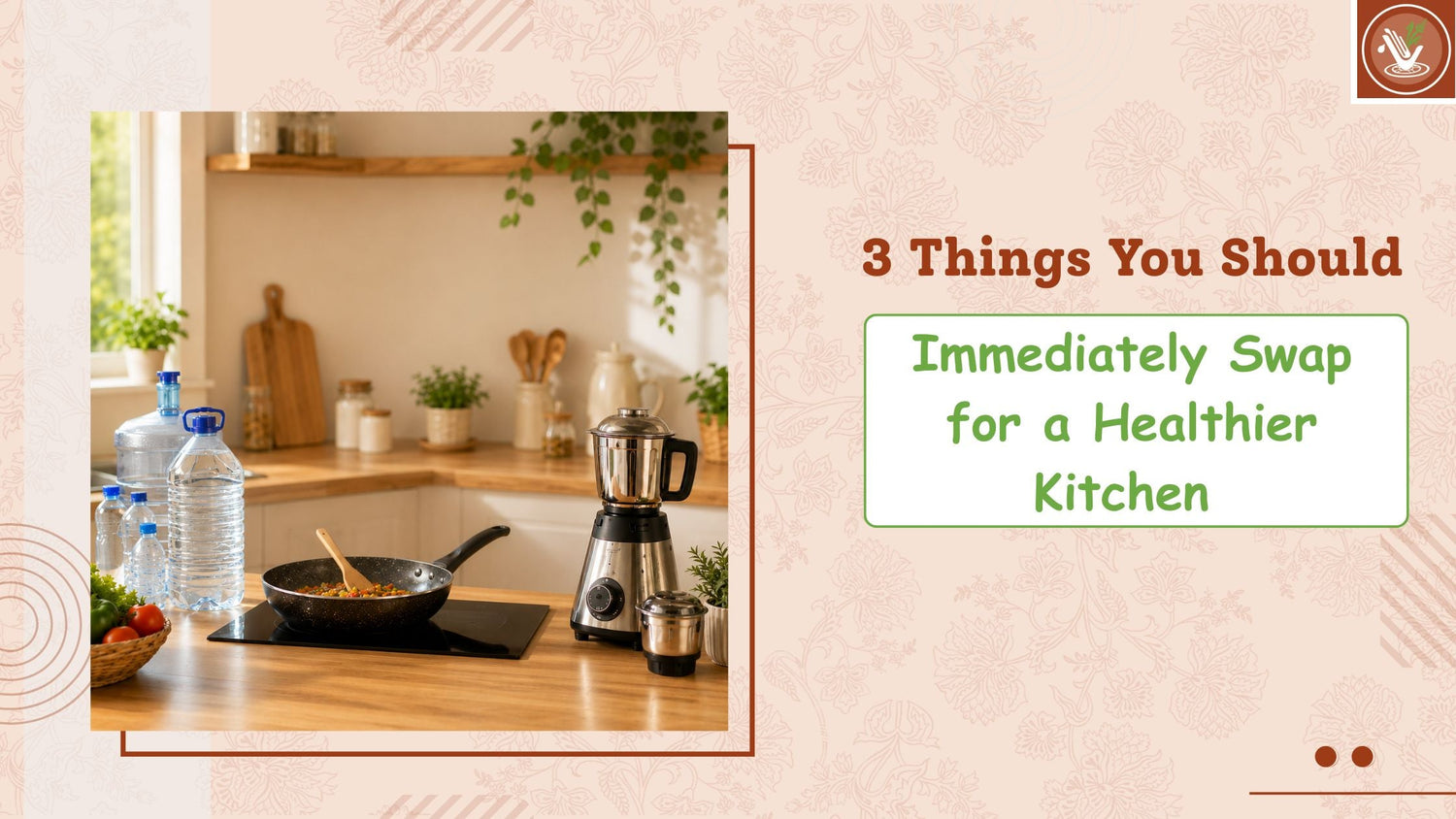
Most of us think a healthy kitchen means organic vegetables, less oil, and a well-stocked spice rack.
But here's what we often miss.
The vessels we cook in, the containers we store water in, the utensils we use every day, these matter just as much as the food inside them.
Just 3 simple, meaningful swaps that bring you closer to the way our grandmothers lived. Let's go through each one.
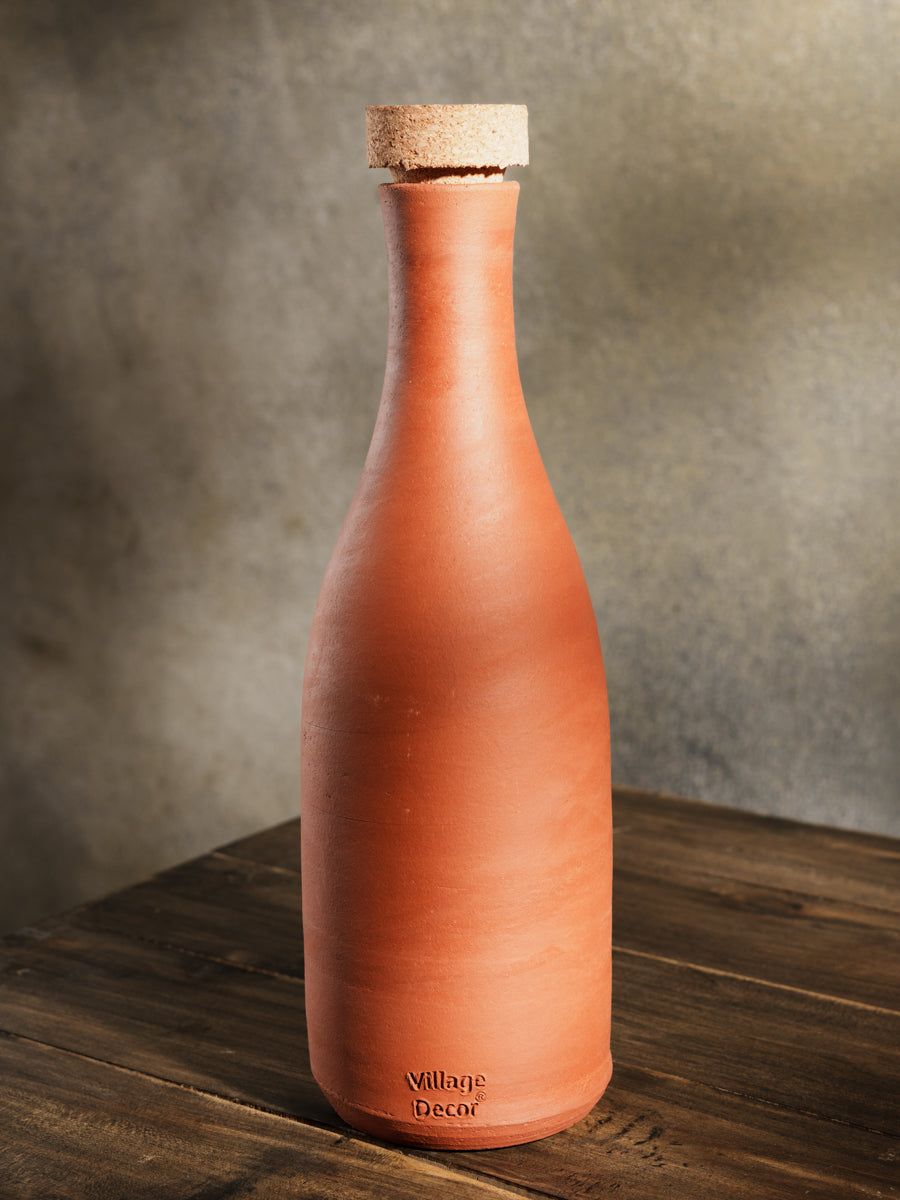
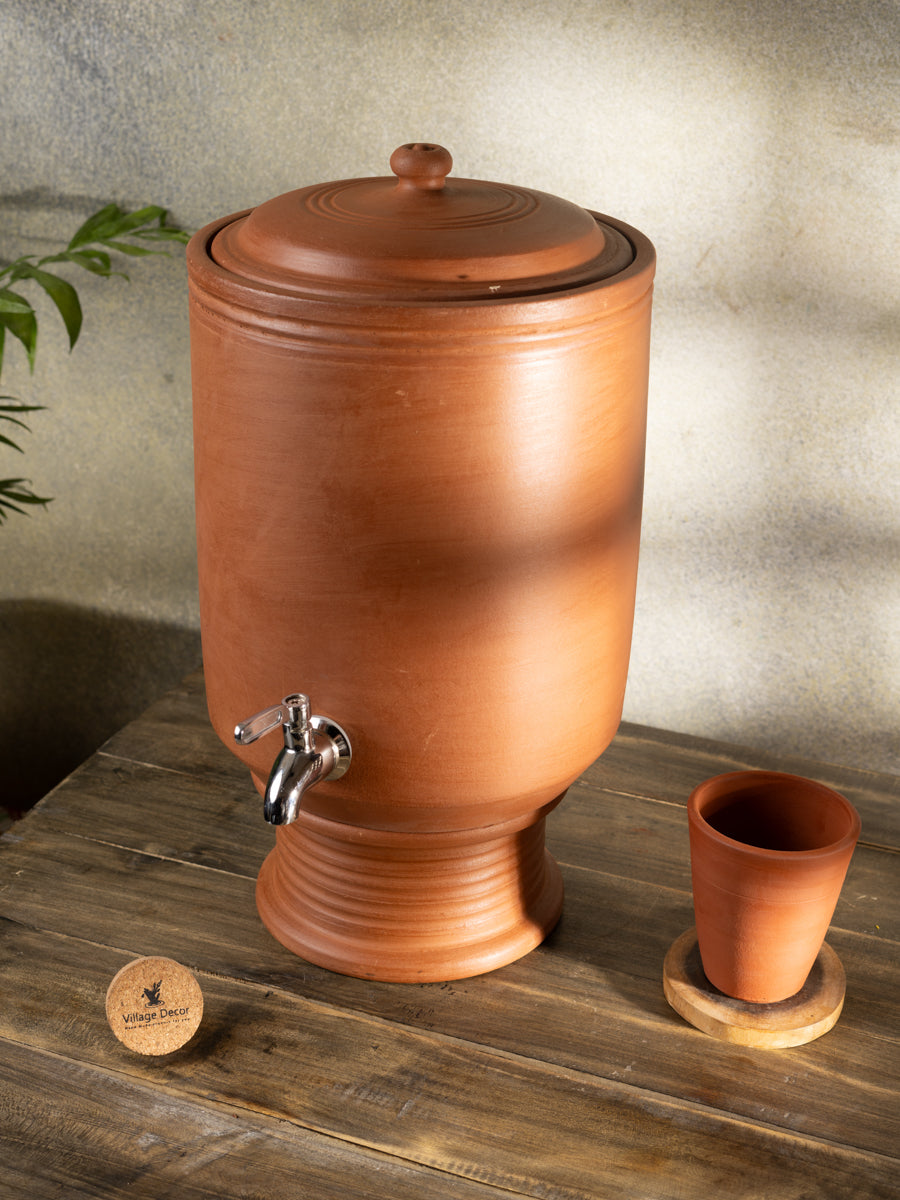
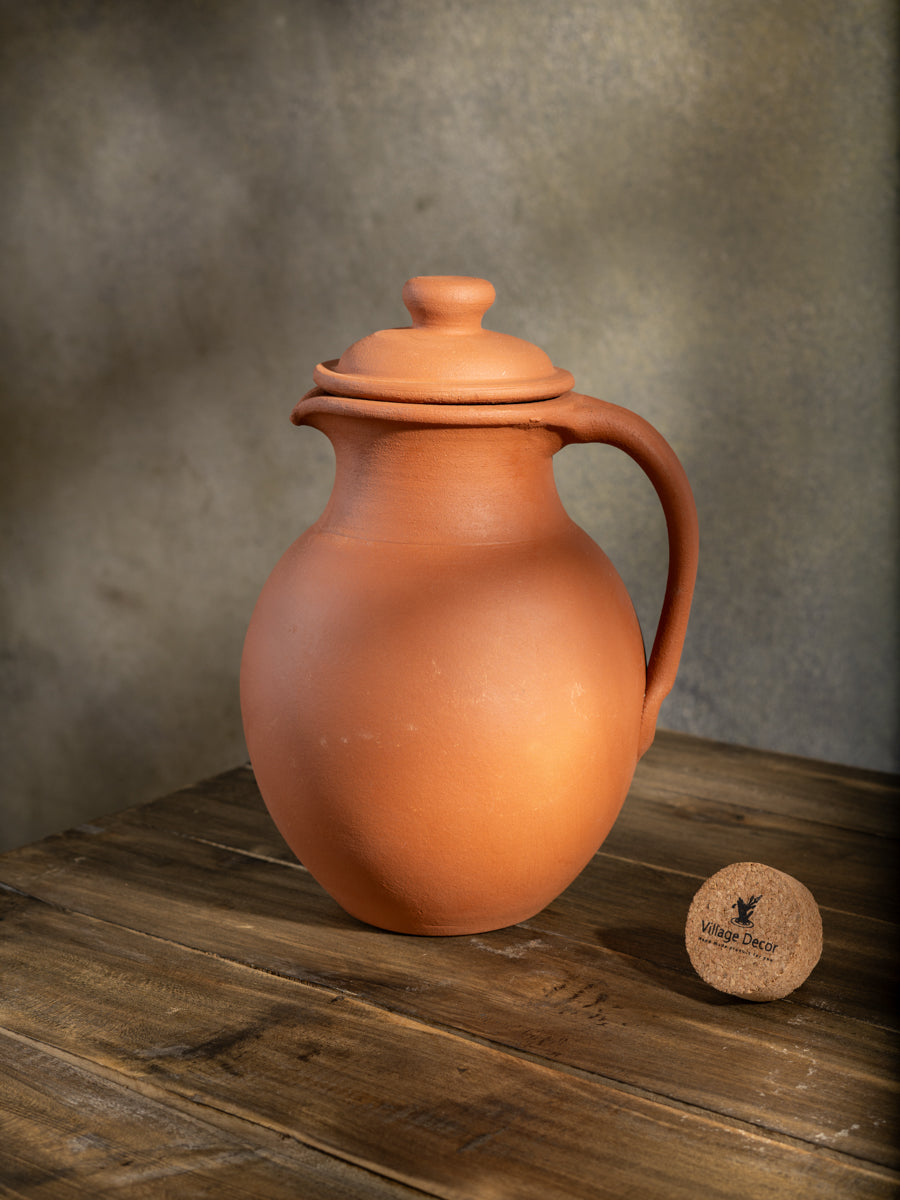
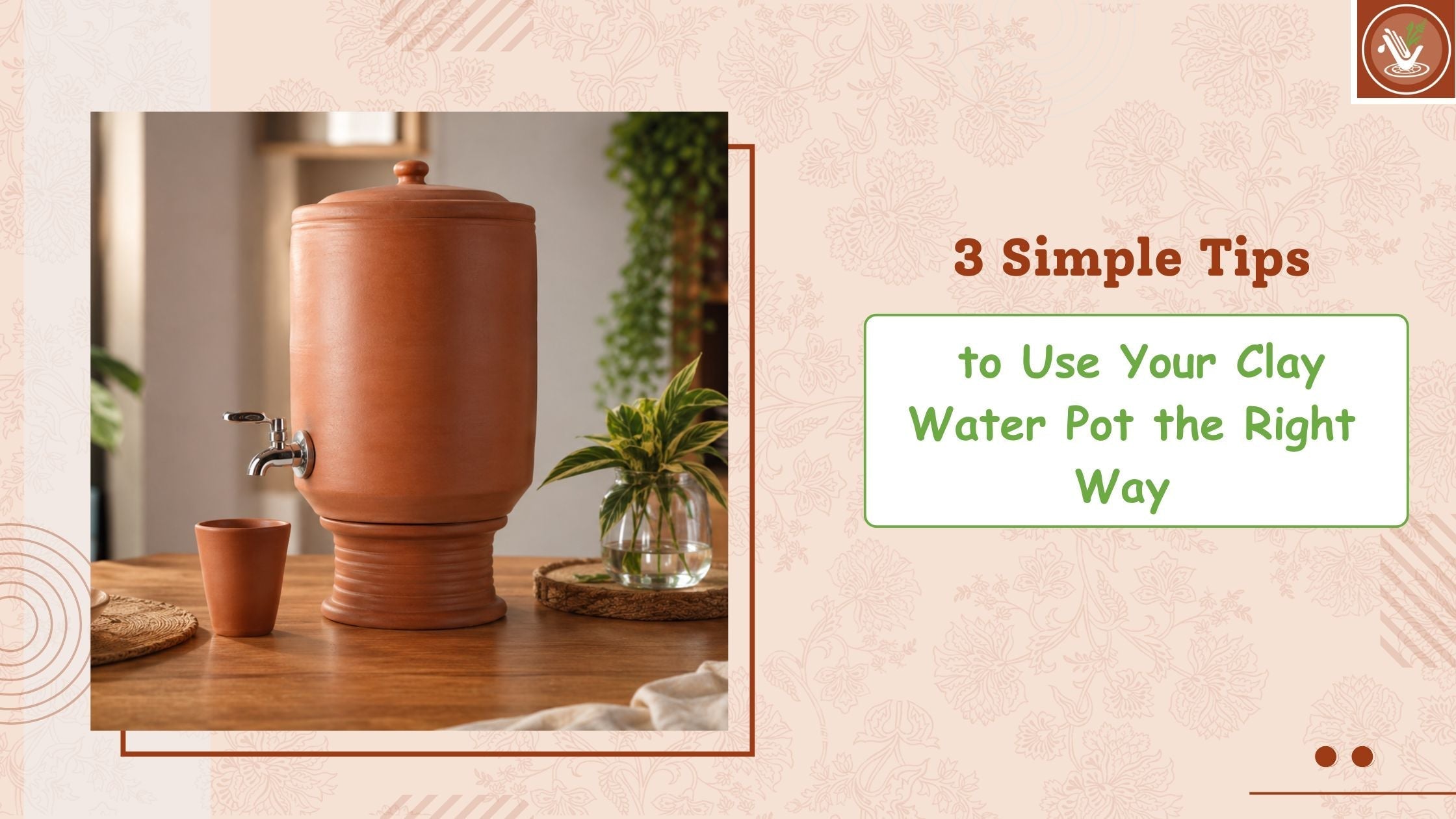
1. Swap Your Plastic Water Bottle or RO Tank for a Clay Water Pot (Matka)
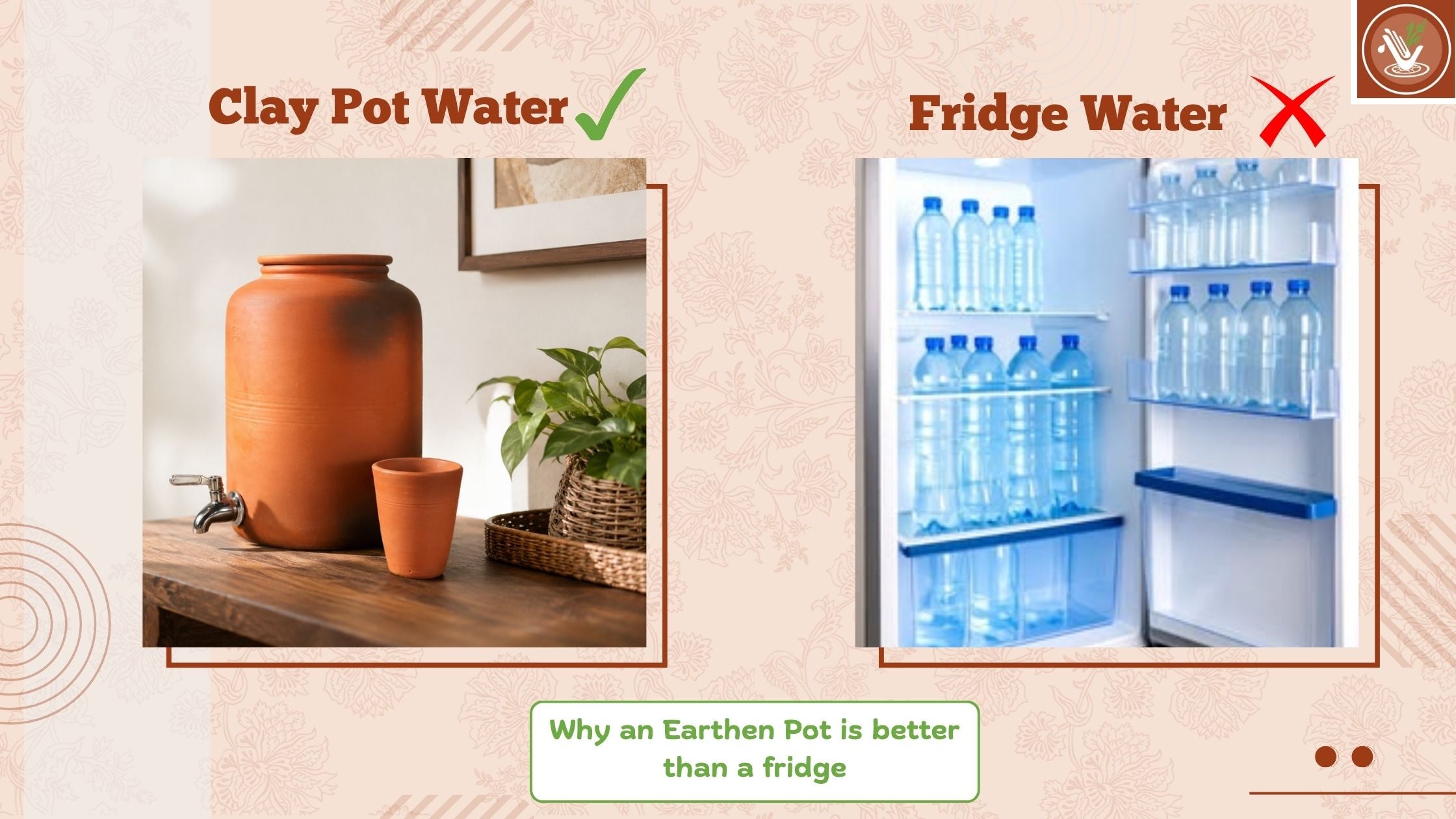
Most urban homes today drink from plastic water dispensers or store water in plastic tanks. Even "BPA-free" plastic raises questions. Because BPA-free doesn't always mean chemical-free. Heat, sunlight, and repeated use can still cause leaching over time.

A traditional clay water pot feels different.
Earthen pots naturally cool water through evaporative cooling. The porous surface of the clay allows micro-evaporation, which drops the water temperature by 8–10 degrees without any electricity.
Clay is alkaline in nature. It naturally balances the pH of water, making it gentler on your digestive system. Some studies suggest that water stored in earthen vessels is richer in minerals like calcium and magnesium — the same minerals your body needs daily.
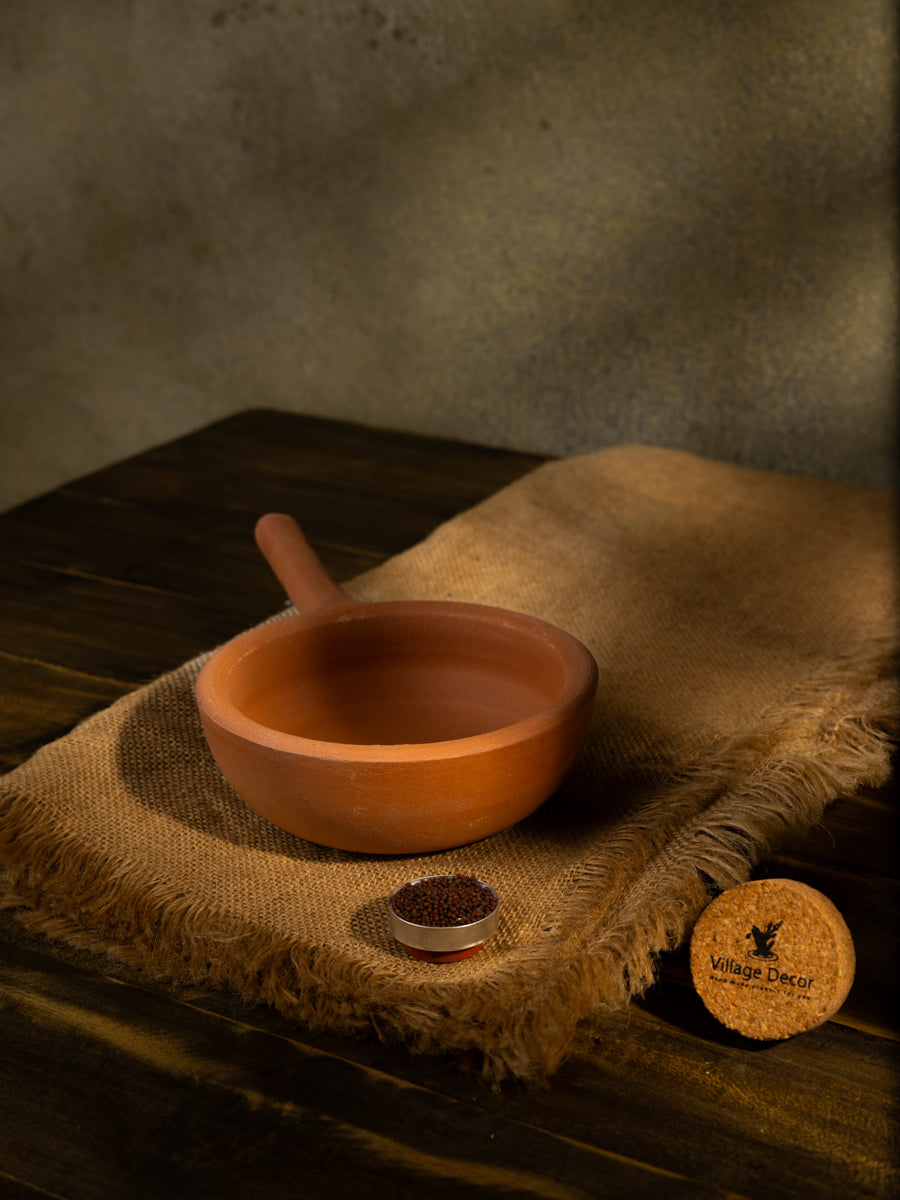
2. Swap Your Non-Stick Cookware for Clay Cookware
Let's talk about the non-stick pan sitting on your stove right now.
When non-stick pans are heated above a certain temperature or when the coating gets scratched, they can release PFOA (perfluorooctanoic acid), a compound linked in research to hormonal disruption and other health concerns. Most Indian cooking involves high-heat tadkas, pressure, and vigorous stirring. That scratched pan isn't just cosmetically damaged. It's potentially compromising.

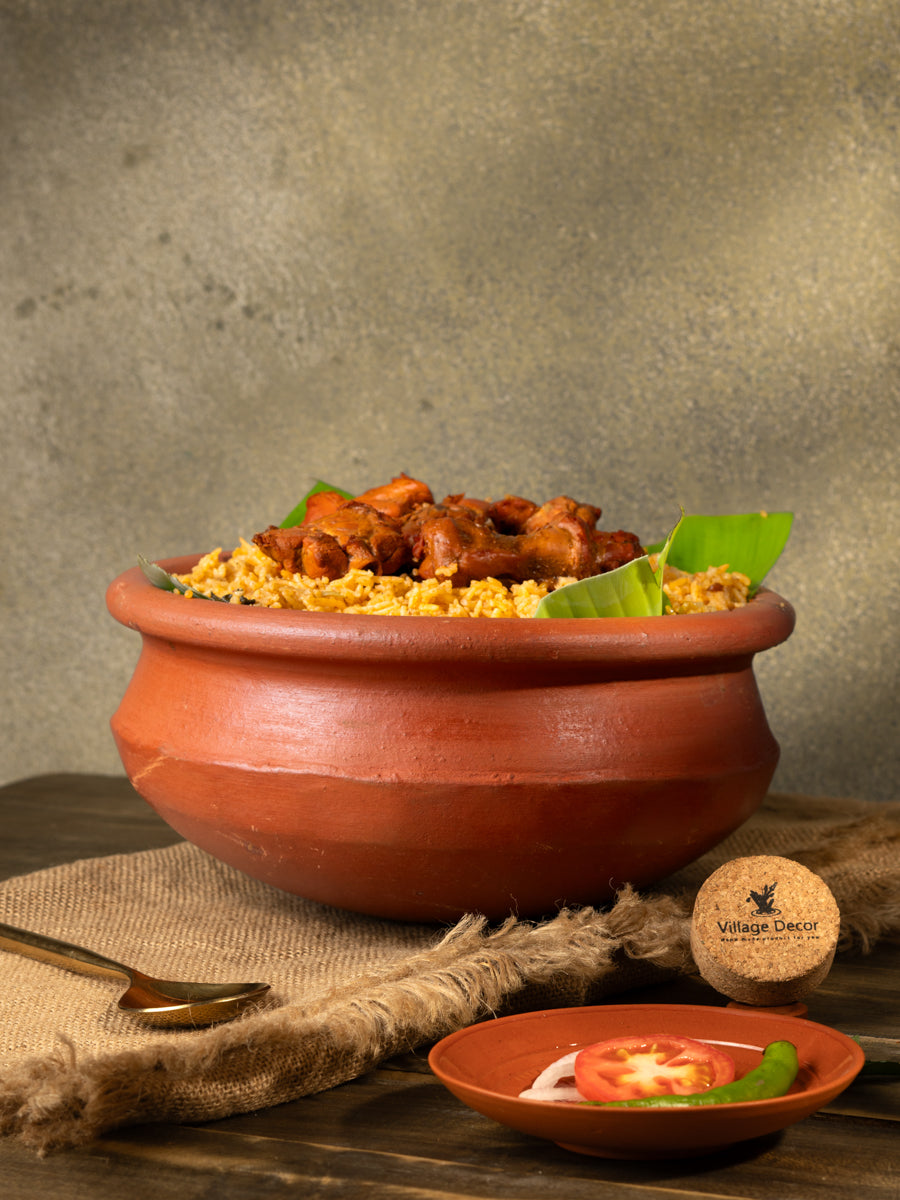
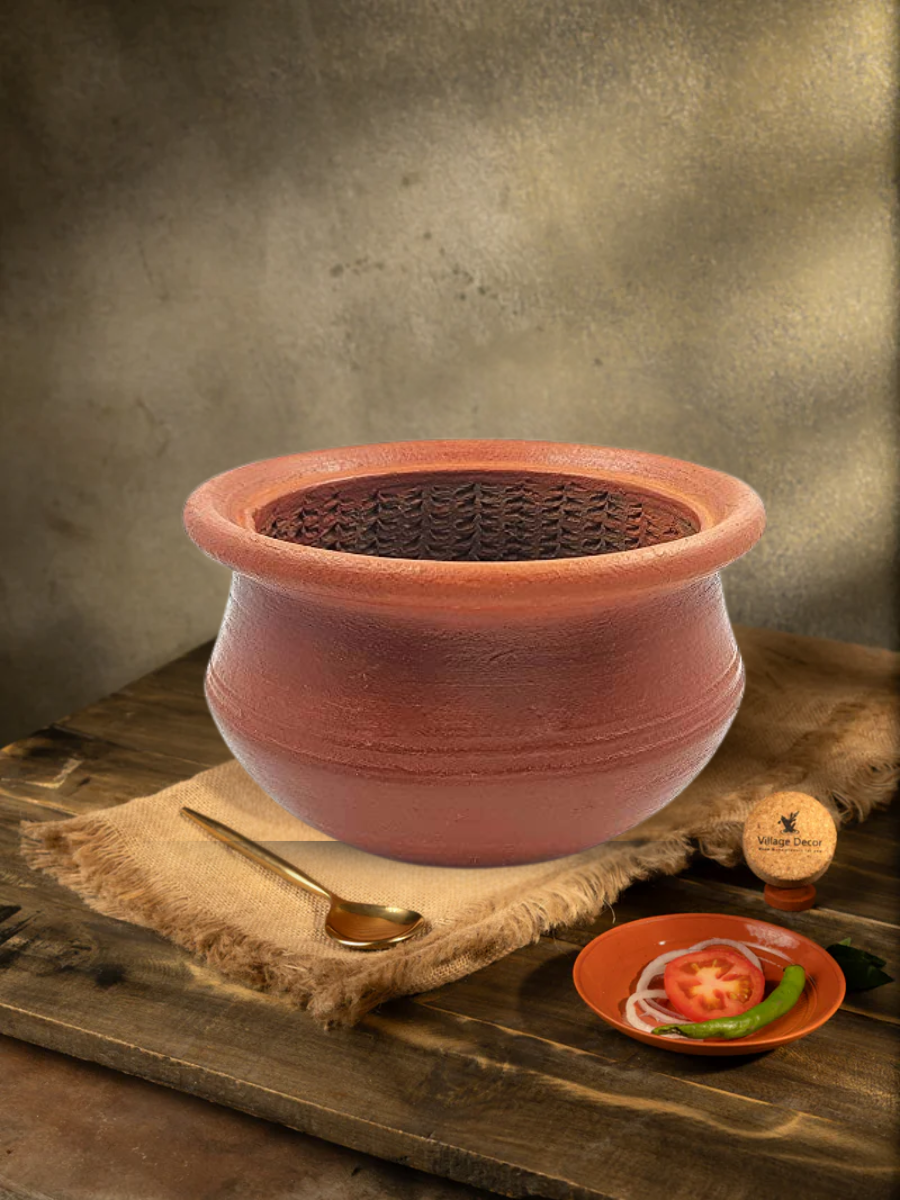
Cooking in clay pots is a slow, gentle process. Heat distributes evenly and is retained longer, which means your food cooks more gradually. This preserves the natural moisture in vegetables and meat, reduces the need for excess oil, and keeps nutrients intact in a way that high-heat metal pans simply can't match.
Dishes like dal, sambhar, biriyani, and halwa cooked in clay pots taste noticeably different — more aromatic, more layered. There's a reason restaurants proudly advertise "handi cooking."
Clay also adds trace minerals to your food. The iron content of food cooked in clay cookware increases measurably, something especially valuable for families dealing with iron deficiency.
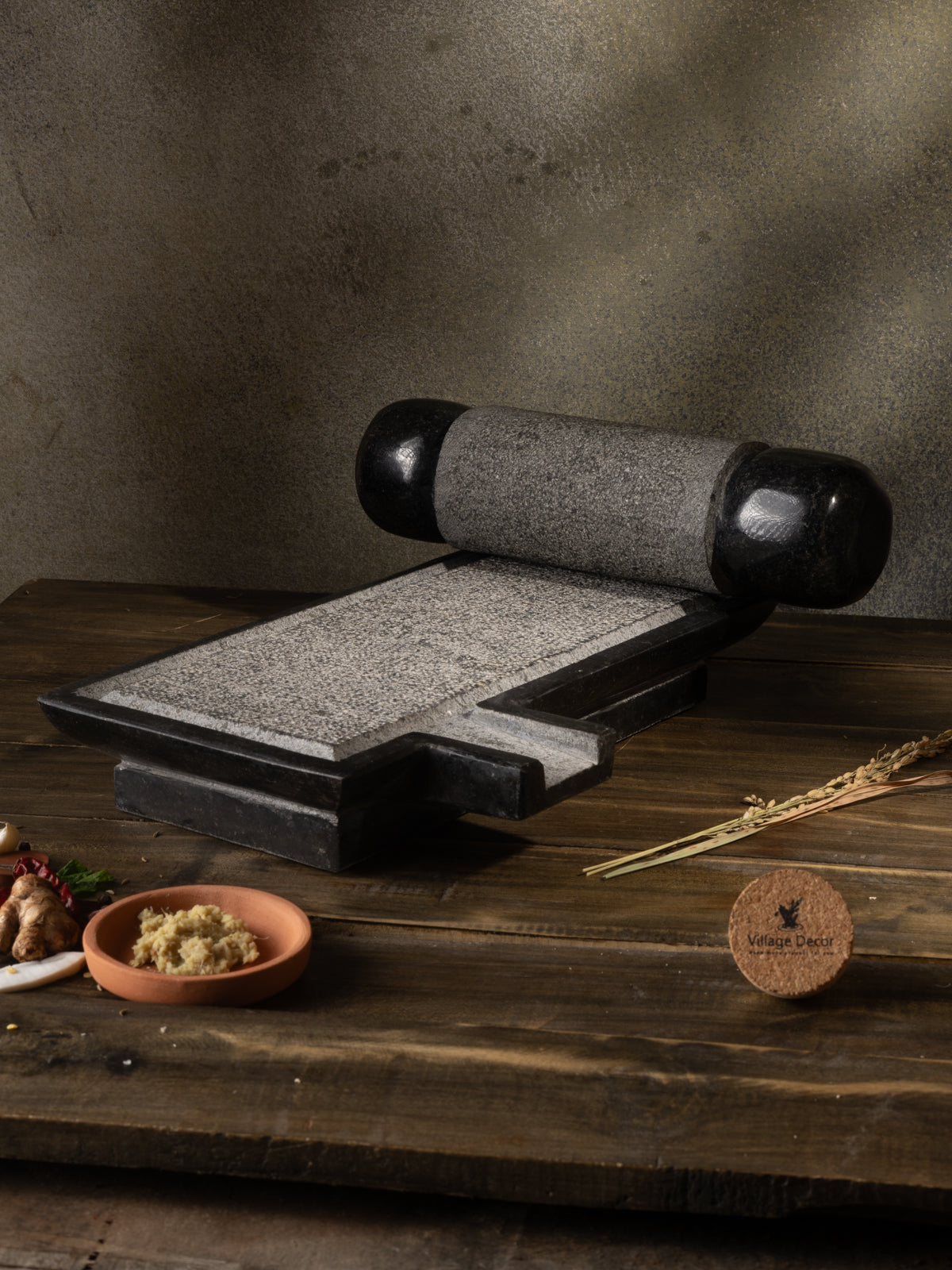
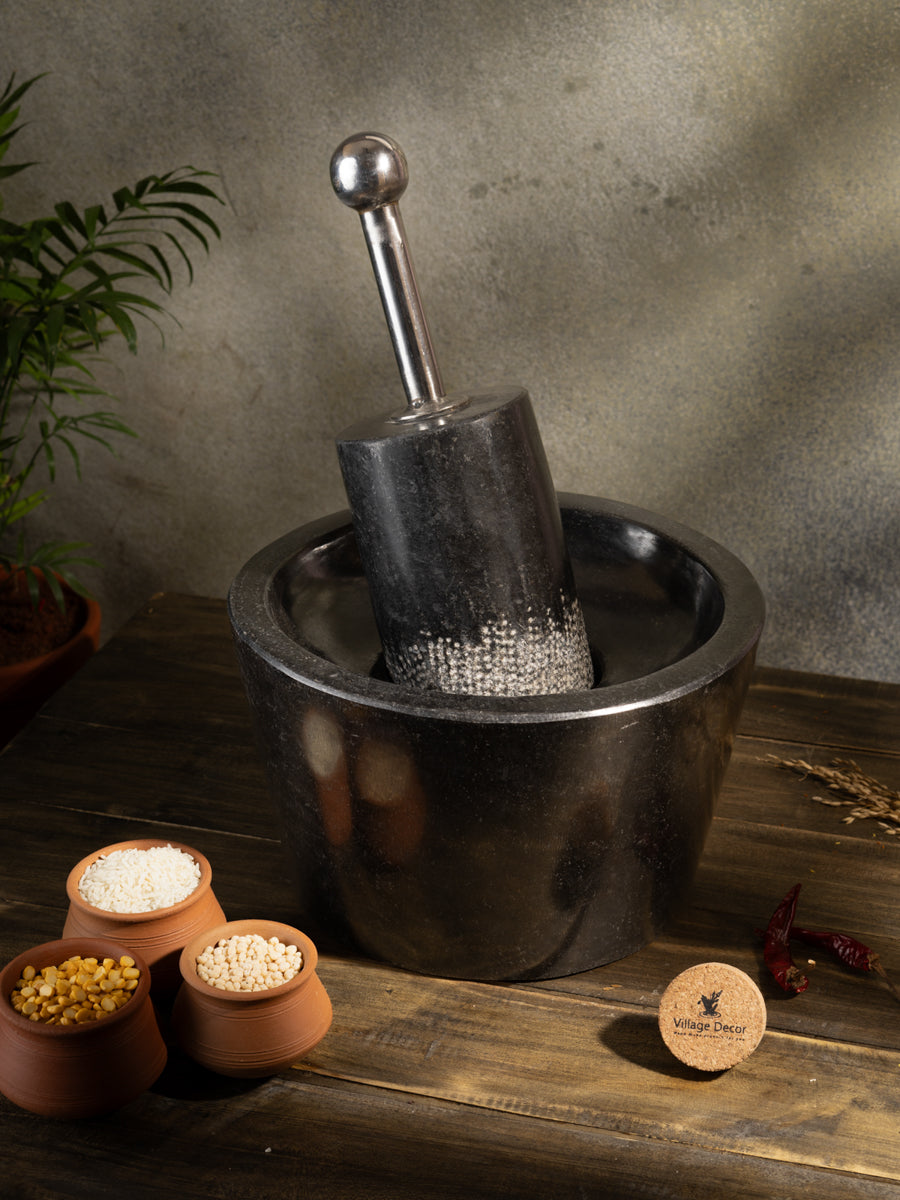
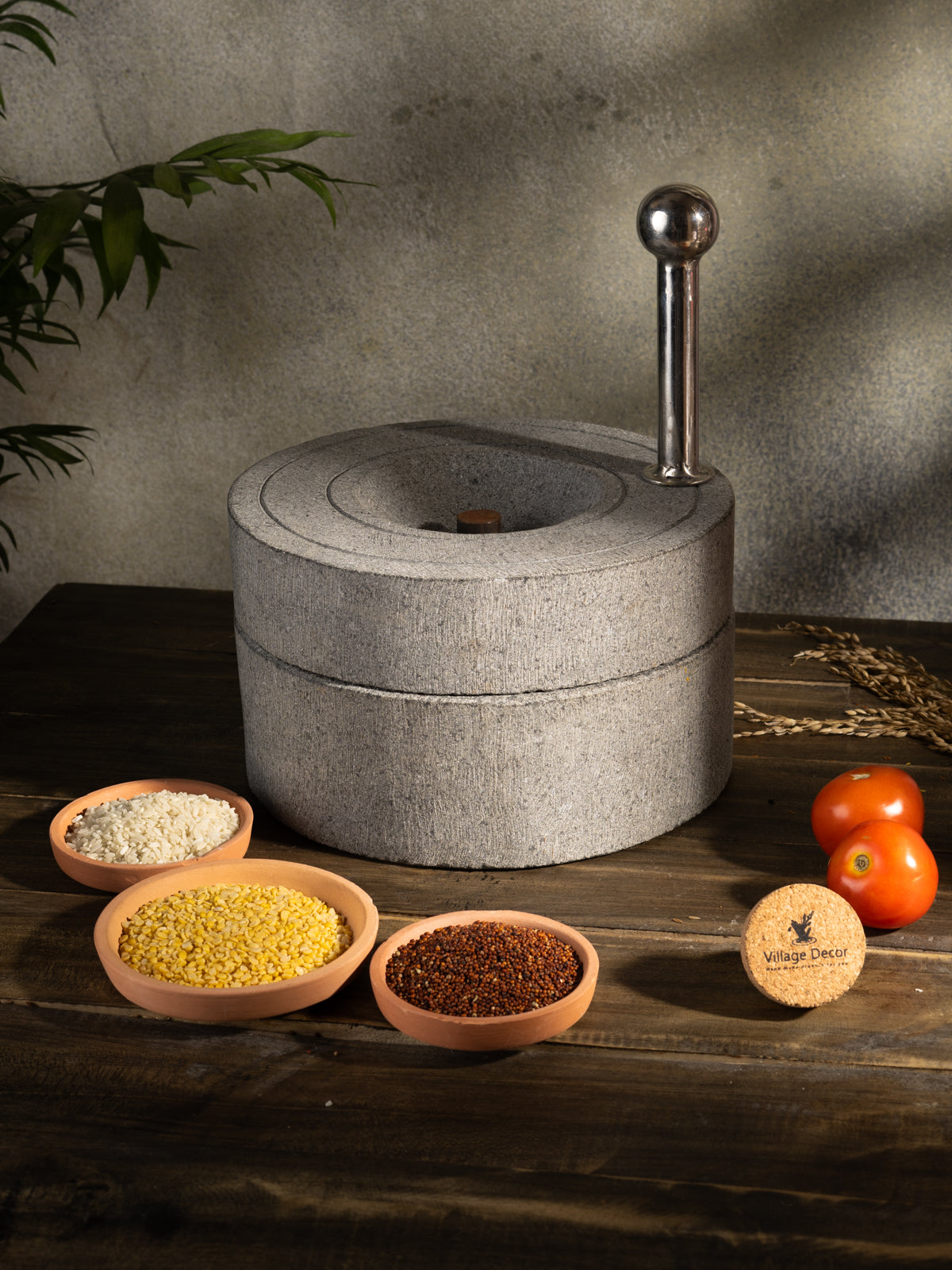
3. Swap Your Mixer-Grinder for a Traditional Mortar and Pestle (Ammi Kallu / Silbatta)
We've become completely dependent on the mixer-grinder. It's fast, it's convenient, and we rarely question it.
But think about what happens when you grind spices or chutney in an electric blender. The high-speed metal blades generate heat. That heat breaks down the volatile oils in your spices — the same oils that carry the real flavour and medicinal value. What you get is a paste. What you lose is depth.

A traditional stone mortar and pestle — called ammi kallu in Tamil Nadu or silbatta in North India — works through pressure and friction, not speed. This cold-grinding process keeps the essential oils intact. Your chutneys taste fresher. Your masalas smell stronger. Your coconut paste has a texture no blender can replicate.
A Healthy Kitchen Isn't Built Overnight — But It Starts with One Swap
We've been sold the idea that modern means better. Shinier means safer. Mass-produced means reliable.
But for a truly healthy kitchen, the truth is often the opposite.
The healthiest Indian kitchens right now are quietly going back to their roots — clay water pots, terracotta cookware, stone grinders. These aren't trends. They're a return to something our culture understood for thousands of years.
You don't need to replace everything at once. Pick one swap from this list and try it this week. Feel the difference. Then go from there.

Leave a comment
This site is protected by hCaptcha and the hCaptcha Privacy Policy and Terms of Service apply.