
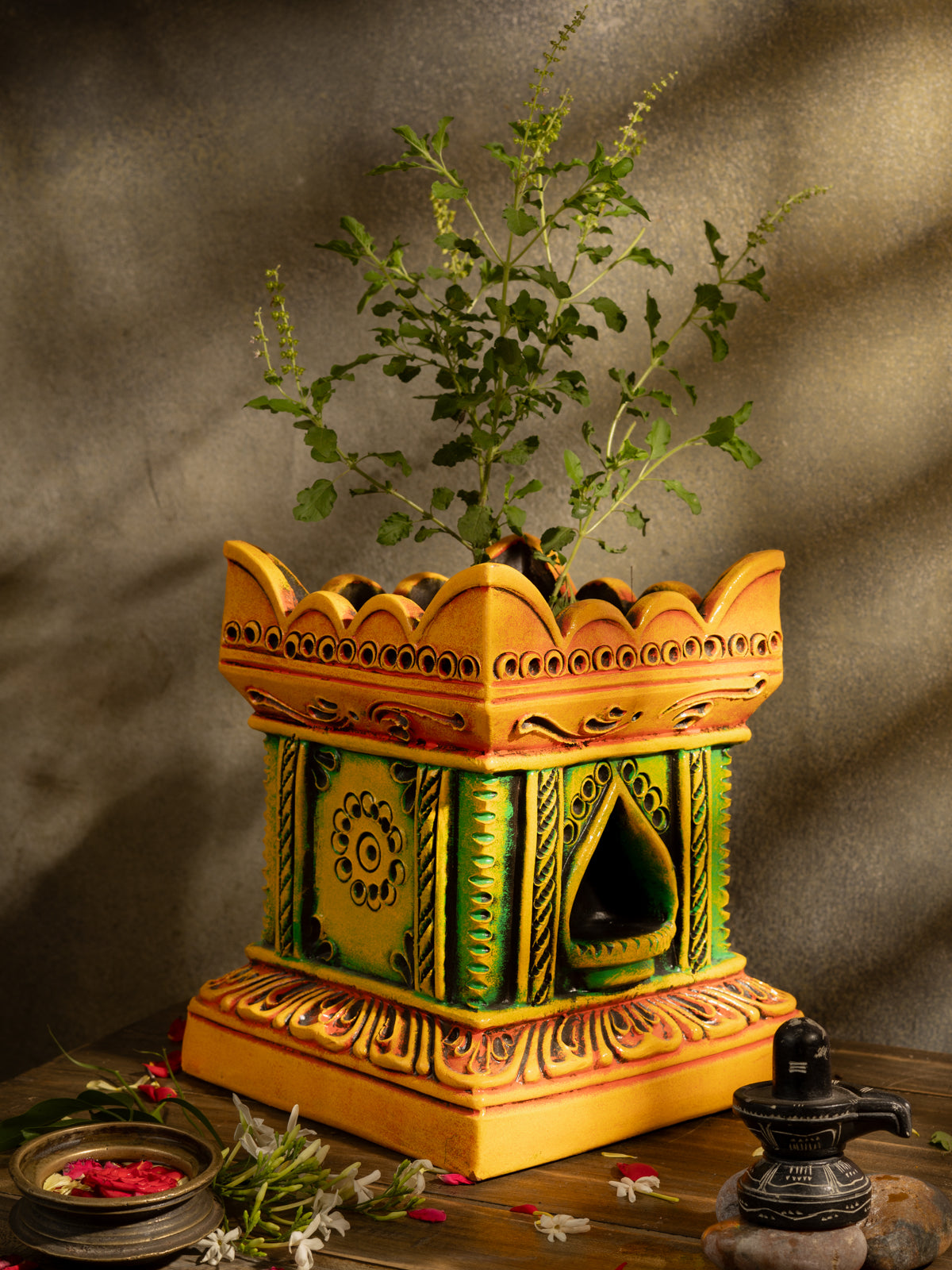
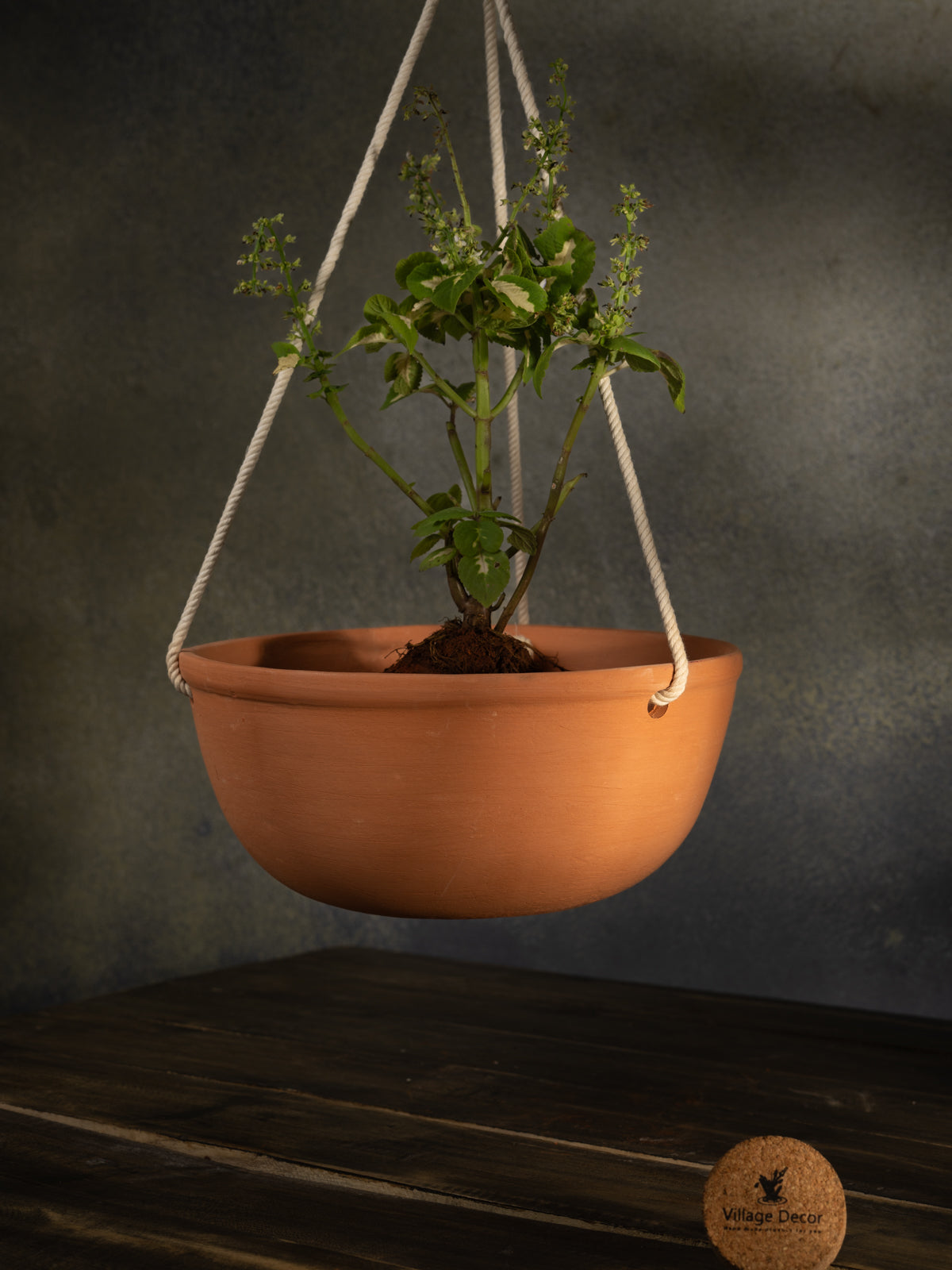
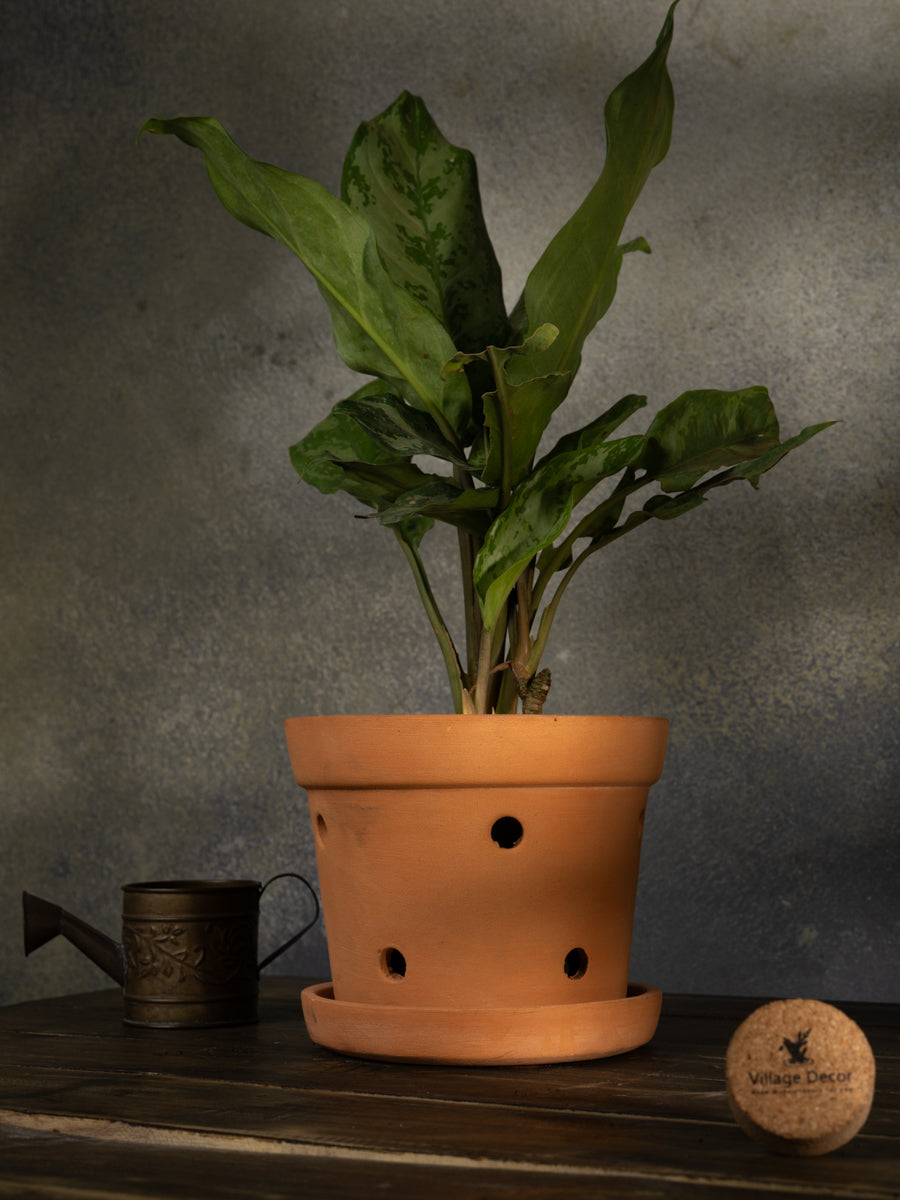
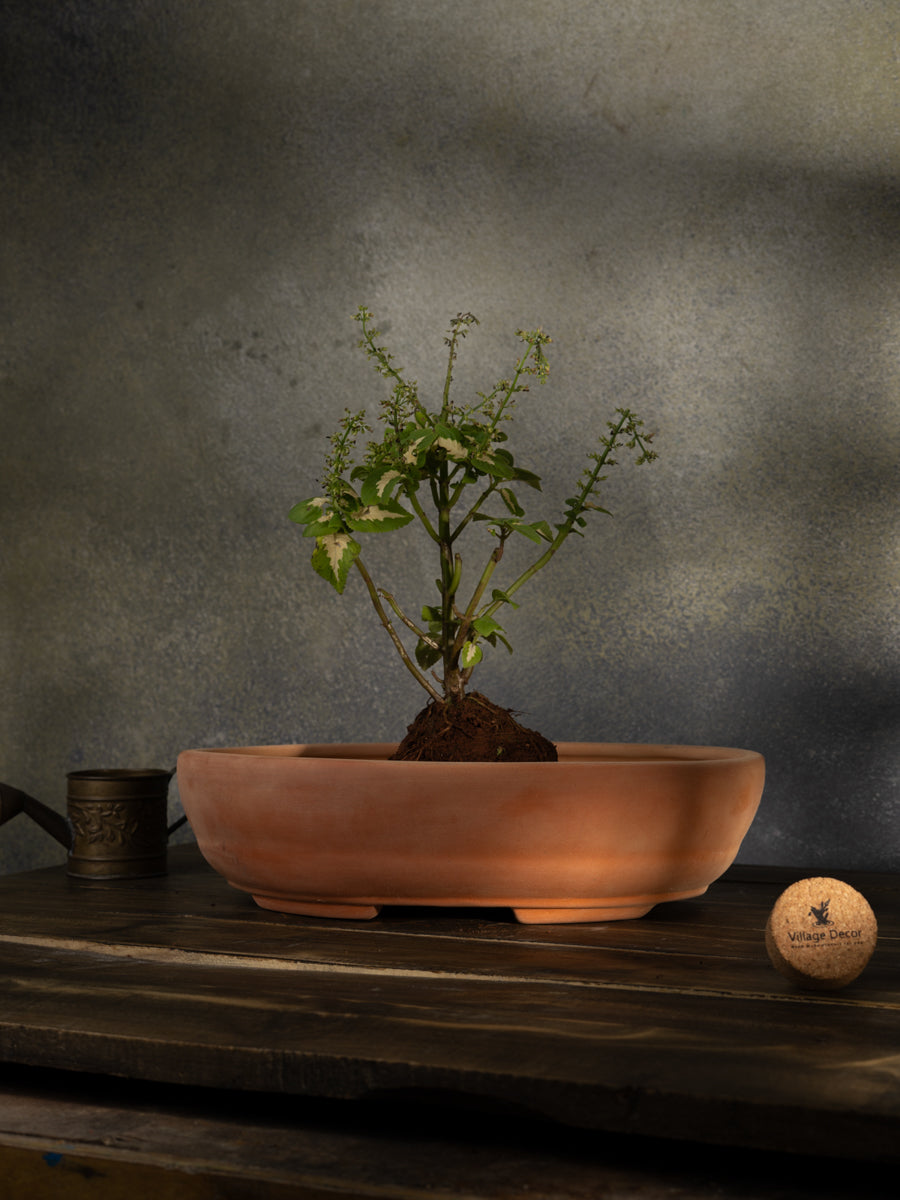




The tulsi plant, also known as holy basil, holds a special place in many Indian homes. It’s not just a plant; it’s part of daily rituals, health practices, and positive energy in the house.
But here’s something many people overlook: how you care for your tulsi plant, especially when using a terracotta pot, makes a big difference in how well it grows.
Let’s keep it simple. Here are the clear do’s and don’ts you should follow.
Do’s of Growing a Tulsi Plant in a Terracotta Pot
1. Ensure Adequate Sunlight for Tulsi Plant Growth

The tulsi plant needs plenty of sunlight to grow healthy and strong.
Place your tulsi plant in a terracotta pot and place it in direct sunlight for at least 4–6 hours daily. A balcony, terrace, or entrance area works well.
Without enough sunlight, the plant may become weak and stop growing properly.
2. Water the Tulsi Plant Regularly (But Mindfully)

Watering is important, but balance is the key.
Keep the soil in your terracotta pot slightly moist at all times. Terracotta naturally absorbs excess moisture, which helps prevent root damage.
Make sure:
- The soil is not too dry
- The pot is not holding excess water
This simple habit keeps your tulsi plant fresh and thriving.
3. Keep the Area Around the Tulsi Plant Clean

The tulsi plant is considered sacred in many homes. Keeping the surrounding area clean is both a cultural practice and a practical one.
A clean space helps maintain both hygiene and positive energy around your tulsi plant in a terracotta pot.
Don’ts of Using a Terracotta Pot for Tulsi Plant
1. Don’t Overwater the Tulsi Plant

Overwatering is one of the most common mistakes.
Even though a terracotta pot helps absorb moisture, too much water can still damage the roots.
Signs of overwatering:
- Yellow leaves
- Mushy soil
- Slow growth
Always check the soil before watering your tulsi plant.
2. Don’t Use Chemical Pesticides on Tulsi Plant

Since tulsi leaves are often used for health and home remedies, using chemical pesticides is not a good idea.
Instead, go for natural options like:
- Neem oil spray
- Homemade organic solutions
This keeps your tulsi plant in a terracotta pot safe and chemical-free.
3. Don’t Plant Tulsi Directly in the Ground

No matter how much garden space you have, it is traditionally advised not to plant tulsi directly in the ground.
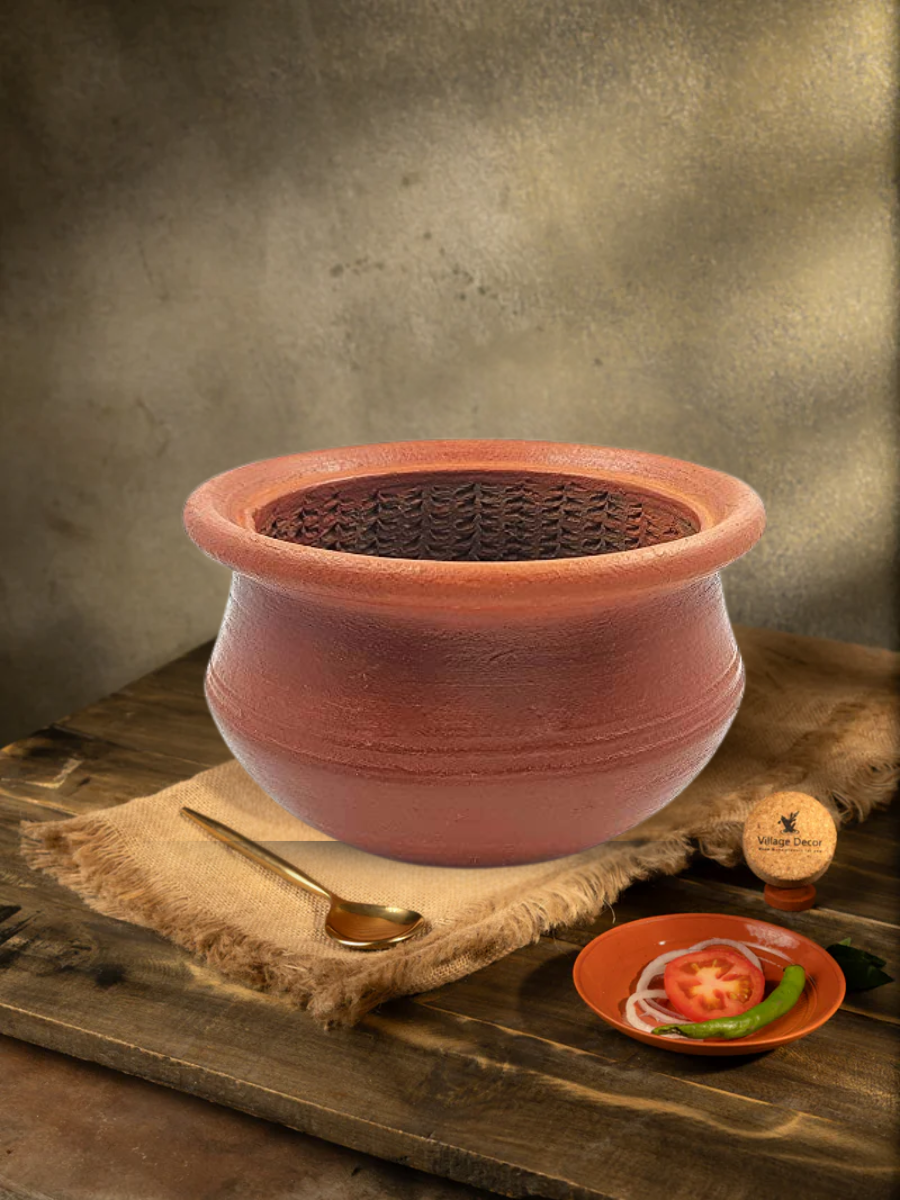
Always grow your Tulsi plant in a terracotta pot.
Why?
- Easier to manage and care
- Better drainage
- Maintains traditional practices
A terracotta tulsi pot also supports healthier root growth compared to many other materials.
When you get these basics right, your tulsi plant will grow beautifully and bring both freshness and positivity into your home.


Leave a comment
This site is protected by hCaptcha and the hCaptcha Privacy Policy and Terms of Service apply.